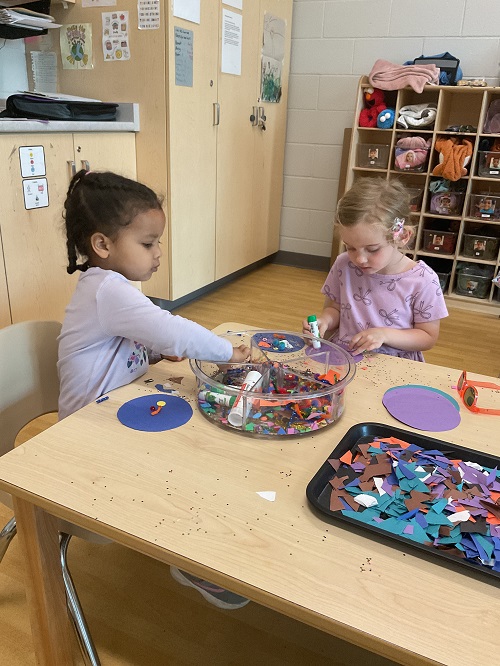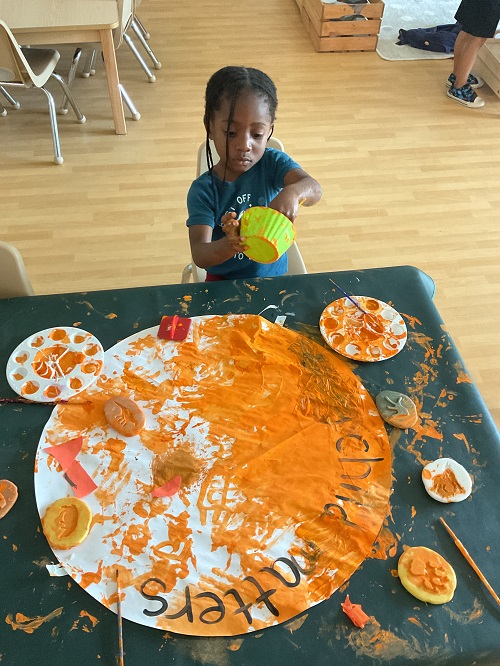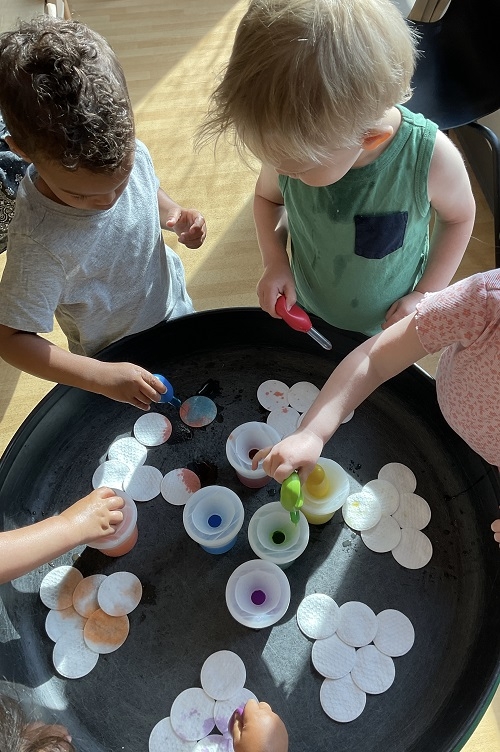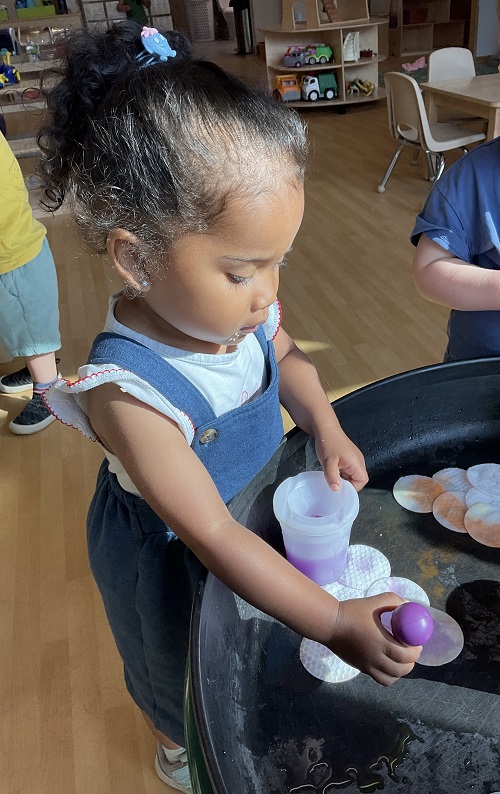
The School-Age 2 team at RisingOaks Early Learning | St. Patrick has been actively enjoying winter outdoor play, using the snow hills for games such as sliding, fort building, Snow Monster, and mountain climbing. Through these activities, the children developed gross motor, social, problem-solving, and cooperative skills while engaging in safe, creative, and shared play experiences.
Program Name: School-age 2

The School-age 2 team at RisingOaks Early Learning | St. Patrick had fun participating in outdoor activities. We have spent time this winter playing on our snow hills in the before and after school program and PD days. The children have been designing and redesigning the snow hill with small fallen branches. We have been taking turns sliding down the hills and playing several games like fort, snow monster, mountain climbing and sliding down the hill. 

  We have taken advantage of our time outside by going out in the mornings early to get extra time on our snow hills. We have enjoyed playing together and had fun carrying out our common interests of playing active games. Some of the children worked together to design a snow forte and they went back to it each day with their friends to turn the snow into side walls for their fortes. 

Snow monster was a game we played that I also participated in. Snow monster was a tag game where the majority of the children were safe on top of the hill and if they came down to the tarmac area they would get tagged. We talked about safety rules and how we could only play on days where the snow hill and tarmac is not icy. Mountain climbing was a fun game where we used small sticks to poke into the side of the hill and assist our climb just like we are doing real mountain climbing. Sliding down the hill was a school age favourite. The children created a fun ramp slide with snow one day and they all took turns sliding down it. 

The children are using their gross motor skills and  large muscle movements when playing active games. They are using their social skills by communicating with peers and teachers when deciding what to create and on rules of the games. The children are cooperating and working together to decide on plans with each other for their changing interests and games. The children are learning about stability and structure building and they are being creative. The children  are learning about hands on problem solving, making decisions and taking turns. The children are learning risky play and how to be safe by establishing rules with each other and the teachers for the snow hill. We can continue to play with the snow outside and build activities based on our interest. 

children climbing snow hill

child sliding down hill

child sliding down hill

child building a fort


The children demonstrated creativity and problem-solving skills as they manipulated the paper packing materials to construct a wide range of purposeful and imaginative creations.
Program Name: School-age 1

This week, the JKK program at RisingOaks Early Learning | St. Patrick were presented with a large box filled with fun paper packing material. As soon as it was introduced, the children eagerly began imagining all the different ways they could use it. Some children placed the paper on their heads, transforming it into long, Rapunzel-like hair. Others cut the material into smaller pieces and decorated them with pom-poms, while one child creatively designed a mask that resembled Rudolph the Red-Nosed Reindeer.

Several children explored the physical properties of the material by stretching the longer pieces as far as they could, while others turned it into a game of limbo, holding the strands up and taking turns moving underneath. A few children were especially drawn to the box itself, using markers to colour and decorate it, and adding smaller pieces of the packing paper along the edges for extra detail.

This activity proved to be a wonderful loose-parts provocation, inviting creativity, collaboration, problem-solving, and imaginative play from this highly inventive group of learners.

rudolph

child wearing the materials as a hat

crossing materials

child wrapping material around her body


These learning experiences supported the children's understanding of health, hygiene, and self care through meaningful, hands on exploration.  We will be completing a project focused on germs and self care to extend our learning.
Program Name: Preschool 1

Since December, the Preschool room at RisingOaks Early Learning | St. Patrick, the children showed a strong interest in learning about germs. They especially enjoyed the book “Sick Simon,” through which they were first introduced to the concept of germs and how they can make us sick. When we came back from our holidays, our friends still showed their interest in reading the "Sick Simon" book and learning more about germs. This sparked curiosity and many discussions among the children.

During circle time, the children gathered together to learn more about germs and how we can keep our bodies healthy. We explored this topic through a variety of learning experiences, including books, videos, group discussions, songs, hands-on experiments, and science activities. These experiences helped deepen the children’s understanding of germs, hygiene, and self-care while keeping them engaged and excited to learn.

Snow Science Experiment

After noticing children eating snow outdoors, we discussed whether snow is clean. we did a snow melting experiment. The children predicted what would happen to snow at room temperature. Some thought it would melt, while others thought it would turn into ice. Snow was placed both indoors and outdoors to observe changes. when It melted and we saw the dirt particles in the water, we connected this experiment to learning about germs, discovering that even the clean looking snow can contain the germs. The children learned that eating snow is not healthy.

Learning Through the iPad

Using the iPad, we watched an engaging video that showed what germs are, where they live, and how they affect our bodies. The children learned that germs are so small we need a microscope to see them. We discussed good germs and bad germs. we asked the open- ended questions about what they have learned from the video.

Toviyah said, “Good germs fight with the bad germs.”

Vincent shared, “Bad germs make us sick.”

When asked how to get rid of germs, the children said, “Wash your hands,” and the educator added eating healthy foods. The children practiced handwashing actions and counting to 20. Toviyah confidently sang "wash your hands with soap and water" song and showed how to rub our hands while singing the song. Other children joined by singing handwashing songs, creating a joyful learning environment. Later, Toviyah independently counted to 20 while washing her hands, showing her understanding.

We also discussed healthy foods. The children shared a list of healthy foods such as grapes, bananas, apples, soup, blackberries, chicken, tuna, and vegetables. Cucumbers, peppers were added to the healthy food list during lunchtime.

Learning from the Book: Stop the Germs

We used the book “Stop the Germs” as our learning source. The educator read the book and asked open-ended questions, connecting this learning to a video the children had watched the previous day. The children confidently answered questions about how we wash our hands and how we rub them properly. They learned three different ways to rub their hands and practiced while singing the ABC Song, Happy Birthday, and counting to 20.

Through the book, the children also learned what germs are, where they live, what they look like, how they can make us sick, and how we can see them. The children were very curious and eagerly shared their ideas.


Learned how to cover our mouth while coughing

Afterward, the children practiced covering their mouths when coughing.

Through discussion, songs, and hands-on practice, the children showed growing curiosity and an increasing ability to apply healthy habits in their daily routines.

Steps of handwashing (Picture Cards)

To extend the learning, picture cards showing the steps of handwashing were introduced. In small groups, the children talked about the images and arranged them in the correct order.

Scarlett shared, “First we wash our hands with soap and water.”

Keirra said, “I can make lots of bubbles with my soap.”

Kuaybe excitedly said, “Paper towel!”

The children worked together to glue and sequence the steps, supporting their language, sequencing, social, and fine motor skills.

Hands-On Germ Experiment (Gloves, Sand, Soap, and Water)

The children explored how germs wash away using gloves filled with water and sand representing germs. They observed how germs spread and then washed the gloves with soap and water.

Vincent said, “Lots of germs… if I wash it under water they all gonna go away.”

Nila shared, “Rubbing the germs here,” and noticed bubbles forming.

The children enjoyed the sensory experience, working together, laughing, and exploring textures. Afterward, they washed their own hands and discussed when handwashing is important, such as before eating and after using the bathroom.

 we performed one more experiment that was pepper science experiment. using pepper, water, soap. water, the children observed how soap helps remove the germs. when soap was added, the pepper moved away and the children were very surprised to see this. they learned that washing hands with water Is not enough, we really need to use the soap to stop the germs.

Now we are focusing on where do they grow. So, we started a Mold experiment by using two pieces of breads. we placed the untouched bread (clean bread) In a Ziplock bag. we touched other bread with our bare hands and made it wet with water. we placed It In other Ziplock bag. we are gong to observe these breads, we will see what is going to happen to our breads. while performing this experiment, we read the "STOP THE GERMS BOOK" and we noticed how the germs looks like. we saw the green colour of germs in the books. After placing the breads in the Ziplock bags, the educator asked the children what do you think, what is going to happen to the breads? some of our friends shared their thoughts on this experiment. Charlie and Scarlett shared that "the bread's gonna turn green". Vincent said, "there will be germs". Nikola said, "The germs are gonna grow", whereas Nila and Noah said, green germs.

Through all of these experiences, they have improved their communication skills, sensory- motor skills, social skills and cognitive skills, while learning how to make healthy choices and care for their bodies in every day life.

child reading a bookChild singing her Germs song
washing gloves with soapy water


Throughout this learning journey, children developed a strong understanding of basic hygiene, healthy living, and self-care. They practiced working together, taking turns, listening to others, and expressing their thoughts supporting social development and emotional well-being. Their growing independence and confidence were evident as they applied what they learned in daily routines.
Program Name: Preschool 2

This month, our preschool classroom at RisingOaks Early Learning | St. Patrick embarked on an exciting learning journey focused on understanding germs and how to stop their spread. The children’s curiosity was sparked while reading the book “Stop the Germs”, which opened the door to meaningful conversations and deeper exploration. As we read together, the children learned that germs are incredibly small and cannot be seen with our eyes—we need a microscope to observe them. This discovery led to rich discussions about good and bad germs, helping children understand that while some bacteria help keep our bodies healthy, others can make us sick.

Through group conversations and shared experiences, children began building cognitive and language skills by asking thoughtful questions, sharing ideas, and making connections to their own lives. We also discussed the importance of handwashing, healthy food choices, and physical activity as ways to keep our bodies strong and healthy.

To support learning through hands-on experiences, we planned a variety of engaging activities that encouraged children to explore, experiment, and practice important life skills.

One such activity focused on learning how to blow our noses properly. Using paper rolls and pom-poms, children practiced deep breathing through their noses and then exhaling to make the pom-poms jump out of the rolls. With repeated attempts, children gained confidence and control over their breathing. This activity supported physical development, particularly breath control and coordination, while also building self-help and social-emotional skills as children learned to care for their bodies and respond to their needs.

Hand hygiene was another key focus of our learning. To make handwashing fun and meaningful, children participated in a sensory activity using vinyl gloves filled with water to represent hands. Green paint was added to symbolize germs. With soapy water and washcloths, children eagerly worked to clean the “hands,” carefully washing between fingers, on the backs of hands, thumbs, palms, wrists, and under fingernails. This experience supported fine motor development, sensory exploration, and cognitive understanding of sequencing and cause-and-effect. Following the activity, children practiced handwashing at the sink with the educator, demonstrating increased independence, patience, and attention to each step of the process.

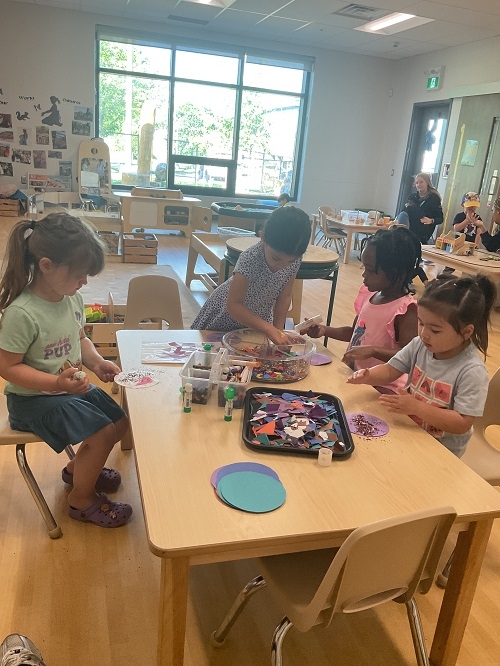
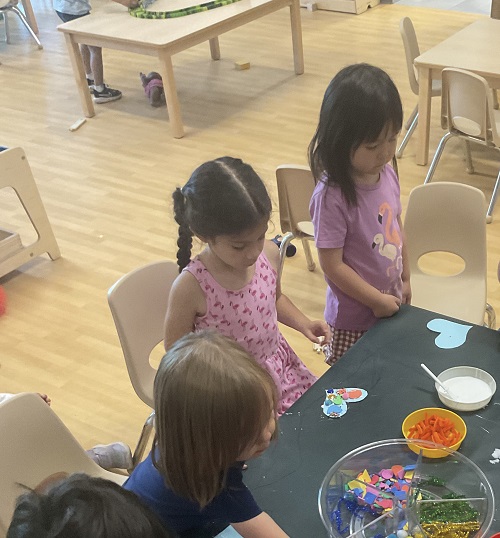
As our learning continued, children began wondering: If germs are so small that we cannot see them, what do they look like? How do they spread? These questions led to an open-ended exploration that encouraged children to share their perspectives first. Using construction paper, art materials, and homemade playdough, children expressed their ideas by drawing and creating three-dimensional germ models. They were invited to enhance their creations with provocations such as googly eyes, Q-tips, straws, pipe cleaners, and glitter. This activity supported creative expression, problem-solving, and fine motor skills, while also strengthening confidence and communication as children explained their creations to peers and educators.

To understand, how germs spread / move from one area to another? We represented glitter as our germs and placed them on their hands. Then, the educator asked children to continue their daily activities and play. After 15-20 minutes we noticed how the glitter (germs) spread and got transferred on the surface of a table, toys, carpet, their faces, hair and wherever they were touching. We also did handshakes and high fives with one person with clean hands another with germs on the hands. The children observed how the germs (glitter) got attached on the clean hands. This activity encouraged thinking and reaching conclusion, while also supporting their curiosities about the world around us.

To deepen our understanding, we explored a simple science experiment to answer an important question: Why do we need soap to wash our hands? A bowl of water, black pepper to represent germs, and soap were used. When children touched the “germs” without soap, nothing happened. However, when a soapy finger touched the water, the pepper quickly moved away. The children were amazed by this reaction, which helped them understand that germs do not like soap. This experiment encouraged scientific thinking, observation, and cause-and-effect reasoning, while also supporting curiosity and engagement.

To further extend this learning and strengthen connections with our community, we will be inviting a special guest into our classroom to share their knowledge and experiences related to health and hygiene. This will provide children with an opportunity to connect classroom learning to the world around them and deepen their understanding through real-life experiences.

Children making germs with loose partsChild at sink washing handsChildren showing off their germs

Washing hands in the tuff tray


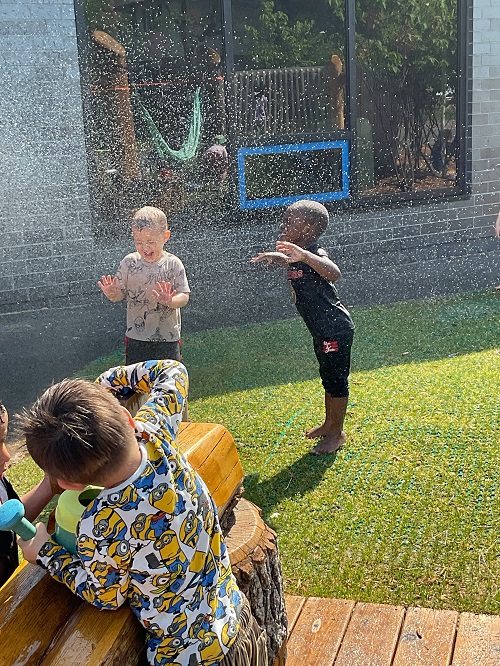
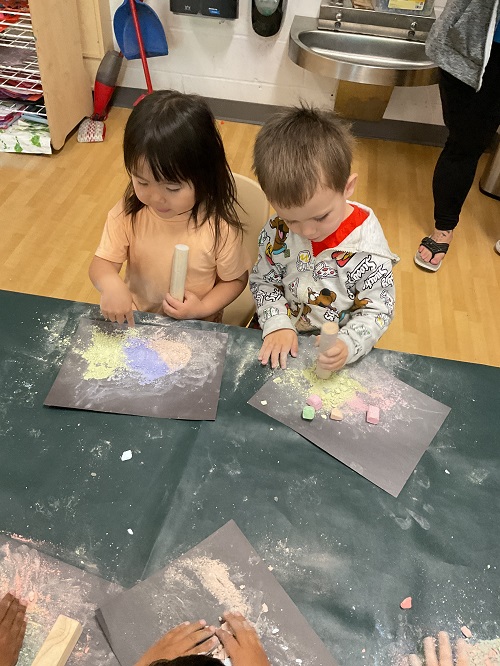
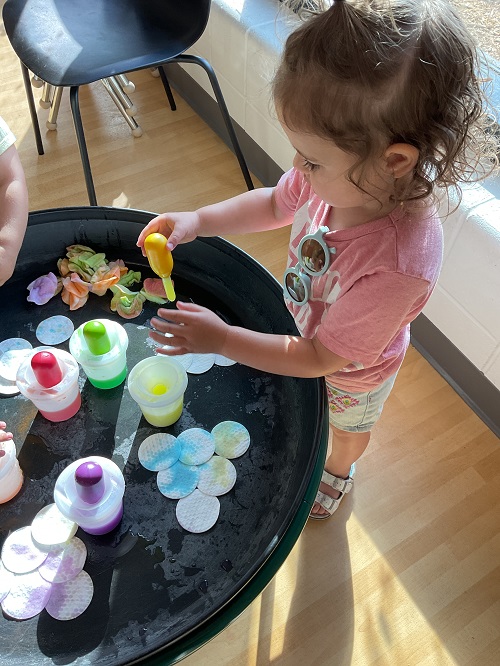
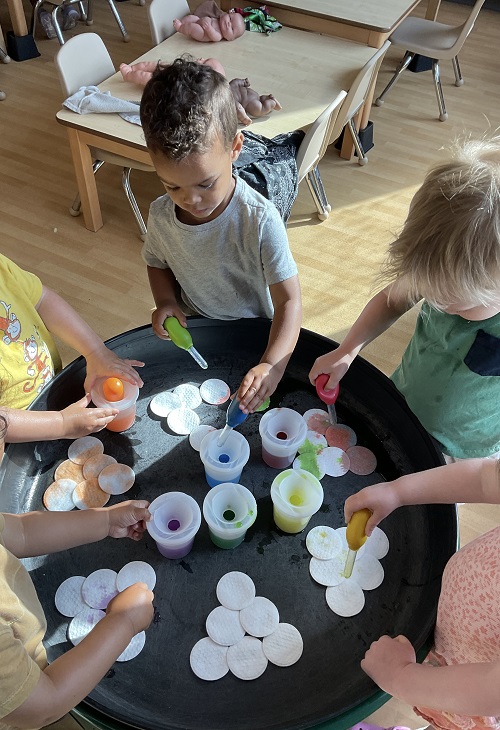
This month’s snow and colour exploration built on the toddlers’ interests in sensory play and winter experiences. Through painting on snow, mixing colours, and experimenting with spray bottles indoors and outdoors, the children explored cause and effect, colour recognition, and texture. They demonstrated growing independence, creativity, and problem-solving while strengthening fine motor skills and early language by naming colours and materials. The shared experiences encouraged cooperation, turn-taking, and peer interaction, highlighting the children’s confidence and joy in learning together through hands-on, play-based exploration.
Program Name: Toddler 2

This month, the toddlers have shown a growing interest in colour exploration and  excitement for snow play. Building on these interests, educators created a rich sensory experience that combined snow, watercolours, and hands-on exploration both indoors and outdoors, allowing the children to deepen their learning through play.

The experience began by bringing snow into the classroom, transforming it into an inviting sensory space. The toddlers were introduced to watercolours as a new type of paint. The educator added a small amount of water to the paint and invited the children to choose the colour and brush they wanted to use by themselves, supporting choice-making and growing independence. Knowing the children’s love for sensory play, snow was placed inside the tuff tray. The toddlers painted directly onto the snow, eagerly exploring how the colours spread, mixed, and changed on the cold, white surface.

As they played, the children showed curiosity and excitement. Robbie demonstrated early language development by naming the colour he was using, saying “green.” Zoey and Brantley repeatedly said “snow,” showing recognition and enthusiasm for the material. Emmie explored the paint using her hands and as she mixed the colour together, while Dante expressed delight as he felt the cold, wet texture of the snow. Benjamin explored the materials differently from switching the use of brush bristles to the handle, showing flexible thinking and curiosity.

The exploration extended outdoors, where the toddlers continued working with snow in group. Together, the children built a snow castle with the help of the educators, strengthening cooperation and shared play. The educators then introduced spray bottles filled with water mixed with food colouring, inviting the children to add colour to their snow creation. At first, some children experimented by shaking the bottles, turning them upside down, or spraying toward themselves as they figured out how the bottles worked. Through trial and error, observation, and gentle guidance from educators, the children learned to squeeze the handles and aim the spray.

Dante, Zoey, Owen, and Robbie successfully used the spray bottles, watching as the coloured water transformed the snow castle. Many children named the colours they were using, demonstrating growing language awareness. As more children joined the activity, they shared materials, took turns, and communicated with peers, strengthening social connections.

The snow and colour exploration supported the toddlers’ fine motor development through painting, squeezing spray bottles, and manipulating materials. It encouraged sensory exploration, creativity, problem-solving, persistence, and confidence. The experience also fostered language development as children named colours and materials, and strengthened social skills through cooperation and shared play. Overall, this learning journey highlighted the children’s curiosity and growing ability to learn together through meaningful, play-based experiences.

outdside painting snow

1 child with her hands painted

2 children, water paint and snowmultiple children painting snow


RisingOaks Early Learning logo

RisingOaks Early Learning Ontario
Administration Office
10 Washburn Drive, Unit 2 Kitchener, ON N2R 1S2
Charitable Registration Number: 137747705RR0001

Telephone: 519.894.0581
Fax: 519.894.6935
E-mail:

Publish the Menu module to "offcanvas" position. Here you can publish other modules as well.
Learn More.