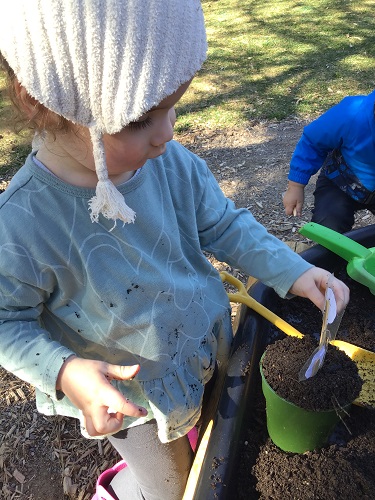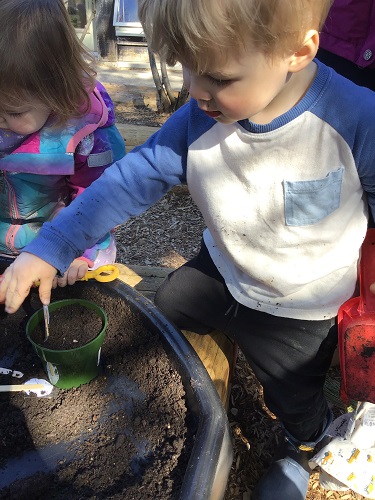
Since the beginning of spring the toddlers have been learning about flowers and how to plant them outside in our gardens. It started when one spring morning the toddlers gathered near the playground garden area where trays of real dirt, small buckets of soil, and colorful popsicle stick flowers had been carefully prepared. The toddlers approached slowly, curious about the earthy smell and soft texture beneath their fingers. Some crouched low to scoop handfuls of dirt, letting it trickle through their hands, while others used tiny shovels to pat and press the soil into their buckets.
The popsicle stick flowers rested nearby, bright and inviting. Each flower had different colors and shapes, encouraging the children to explore and choose their favorites. One toddler carefully pushed a flower stick deep into the soil and watched it stand upright. Another child filled a bucket completely before gently “planting” several flowers side by side. Soon, the play space became filled with pretend gardens made by small, focused hands.
As the exploration continued, we then introduced fake realistic flowers. The toddlers demonstrated growing confidence using fine motor skills to dig, scoop, poke, and press. They moved independently between the dirt area and the flower baskets, making decisions about where and how to plant. Some children worked closely beside peers, observing each other’s ideas and adding more flowers to shared buckets. Others preferred quiet individual play, concentrating deeply as they arranged their pretend gardens.
The sensory experience supported rich learning through touch, movement, and observation. The children explored concepts of nature, planting, and growth while engaging in imaginative play. The real dirt added authenticity to the experience, helping toddlers connect their pretend flowers to the gardens they may see outdoors in their environment.
This playful investigation helped build a foundation for future gardening experiences. The next step will be introducing real flowers and plants so the children can continue exploring how living things grow and change with care, water, sunlight, and time