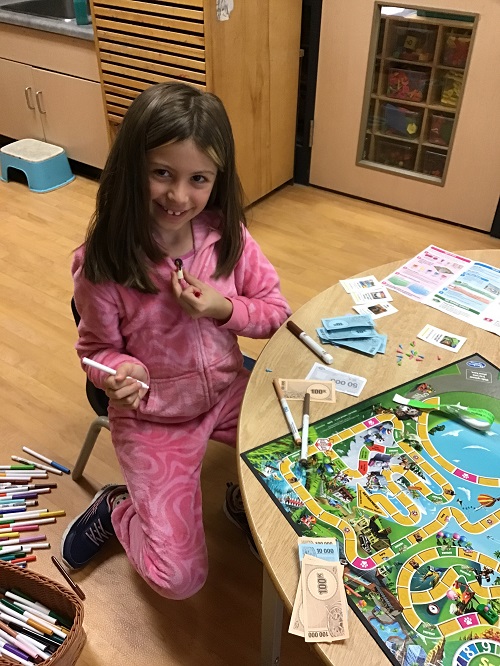
Over the past several weeks, the children in School-age 3 have demonstrated a growing interest in board games. This interest first became apparent when a small group of children began independently choosing familiar games such as Chess and the game of Life during indoor playtime. Many children were observed negotiating roles, explaining rules to peers, and adapting gameplay to include everyone, which highlighted their developing social and communication skills.
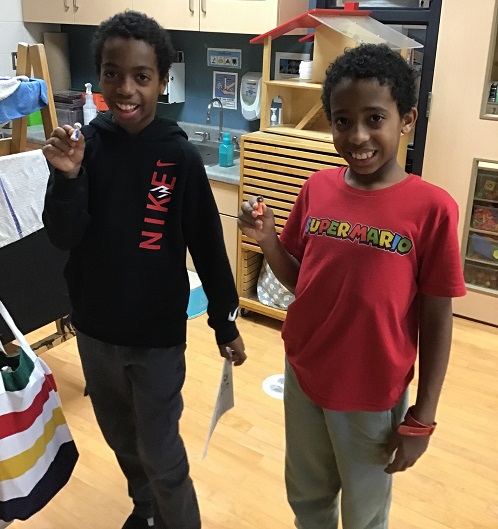
As educators, we recognized this emerging interest as an opportunity to extend learning in a meaningful and engaging way. Christine and Rona found some plain wooden game pieces and had some cork flooring samples from a discontinued display. Christine gave the children each a wooden game piece to create their character. The children were instructed that they would each get only one piece and to make it to represent their character in a board game we will create together. Some children even took their piece home to add extra accessories.
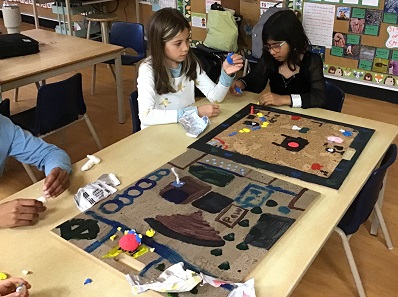
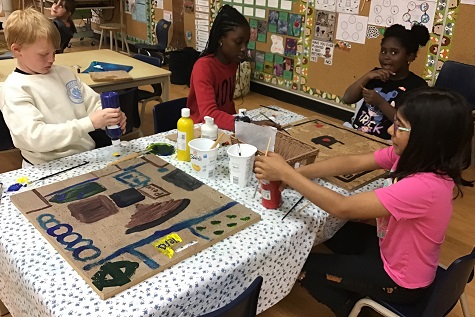
The following days the children were excited to share their game pieces with their peers. Christine provided paint and one cork flooring sample each to two small groups of children. In their small groups the children discussed what they would paint on the board and how the game would work. One group asked if they could add cards to their game so we cut some card stock for them to prepare the cards. Another addition was to bring some air-dry clay to make a “final boss” character.
As the game came together, the children collaboratively developed rules. This was a particularly rich learning experience, as they had to think critically about fairness, sequencing, and gameplay structure. Educators supported this by asking guiding questions such as, “What happens if someone lands here?” or “How will we make sure everyone gets a turn?” The children tested their game multiple times, making adjustments as needed, demonstrating problem-solving skills and persistence.
Throughout this project, the children showed a strong sense of ownership and pride in their work. They were excited to share their completed board game with others and took initiative in teaching peers how to play. This experience not only built on their initial interest in board games but also supported a wide range of developmental areas, including social collaboration, creativity, language development, and critical thinking.
We are hoping to have each group take their board game to visit School-age 2 and teach some of the younger children how to play. Moving forward, we will continue to observe and support the children’s evolving interests, looking for opportunities to extend their learning through hands-on, collaborative experiences that reflect their ideas and curiosities.