Over the summer, the toddler room at RisingOaks Early Learning | St Matthew spent a ton of time seeking out new adventures and exciting learning opportunities using our favourite place to be: outdoors! Whether we were tending to our garden, using loose parts to add props to dramatic play, or simply running wild with friends, the warm and sunny weather created the perfect classroom, and we seized it as much as we were able to.
Thanks to all the time spent outside in nature, one specific interest that tends to enter the program during this time of year is insects. Many children enjoy making the rounds on our natural playground to inspect the tree trunks for ladybugs and turn over stumps or peek under flower pots for pill bugs. We love to be visited by bumblebees or chase after moths and butterflies as they pass through. With that in mind, the educators were able to invite a very special guest, Jennifer from the Cambridge Butterfly Conservatory, to visit the group with a variety of insects to meet and learn more about.
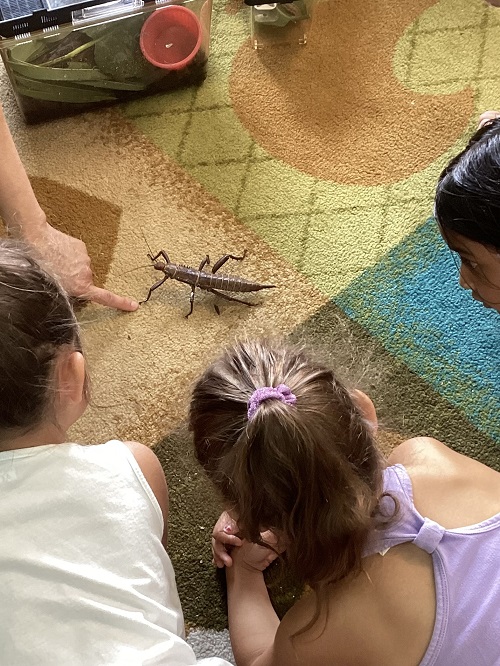
Over the course of her visit, Jennifer introduced us to all the bugs she’d brought along: two owl butterfly caterpillars, beetles, mealworms, one very large millipede, a pair of Madagascar hissing cockroaches, and two stick bugs (also known as walking sticks). Though there weren’t any actual butterflies that came along – Jennifer explained that they don’t enjoy car rides – the children saw the other stages of the butterfly life cycle that they recognized from our recent focus on The Very Hungry Caterpillar, including the tiny white egg he popped out of at the beginning of the story. They were also given the opportunity to touch, hold, and see up close a series of real butterfly wings.
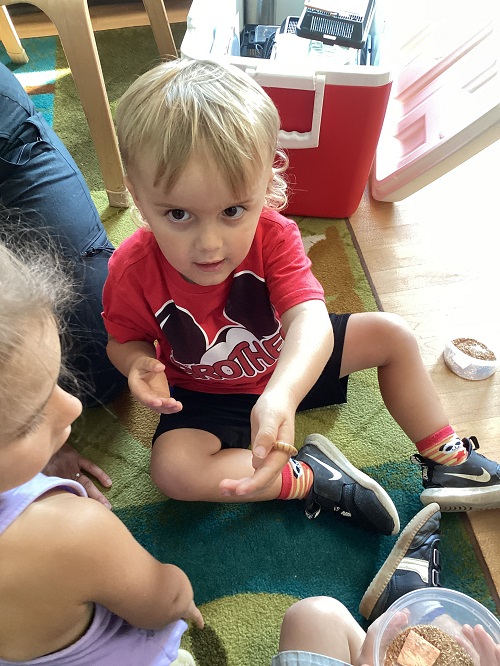
The hands-on aspect of this visit elevated the learning substantially. Every child sat in a circle on the carpet with Jennifer and her many-legged friends, and one by one, they were invited to touch the bugs with a gentle finger along the back if they wanted to. They were prompted with questions about the feel of the bugs to inspire their descriptive language and add another layer to the memory of the experience; is it bumpy or smooth? Is it soft like a teddy, or smooth like a plastic toy? Adding more senses into the discovery of things that are usually only pictures in a book or on a screen inspired much greater engagement, truly capturing their attention and deepening their understanding of the information Jennifer shared.
Together, the group counted the legs on the walking sticks as they were told that all insects have six legs. Some of the children were even brave enough to lay right down on their stomachs for a closer look at the bugs crawling around on our floor! They had front row seats to the long, wavering antennae that they learned are similar to a bug’s ears.
Although none of the children were afraid of the insects, there were some varying comfort levels in the room, but our wonderful guest was respectful and inclusive of how these children preferred to engage. There were photographs of butterfly wings and their unique patterns set out on our tables, along with model insects, and a few sets of kaleidoscope glasses meant to demonstrate the unique way a butterfly sees the world. These in particular were very popular with the toddlers, who enjoyed peering through them at their friends and educators for a small taste of a bug’s perspective. We were all extremely fortunate to have this opportunity to learn from an expert in our community and all her bug friends!