The Preschool 2 children at RisingOaks Early Learning | John Sweeney are continuing to develop independence and confidence through everyday routines and meaningful play experiences. Mealtime has become an important opportunity for the children to practice self-help skills, responsibility, and fine motor development as they learn to serve themselves lunch using spoons and tongs.
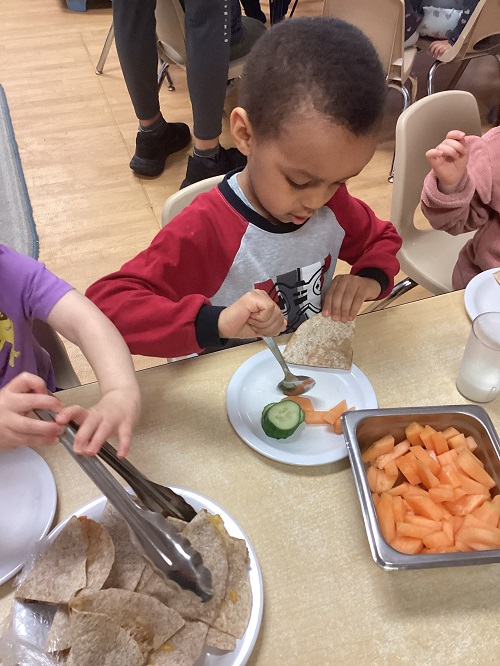
The children showed excitement and determination while carefully choosing and serving their own food. Dawit used a spoon to scoop melon onto his plate. He focused carefully on balancing the spoon and transferring the fruit independently without spilling. Florence used the tongs to pick up quesadillas and place them onto her plate with patience and control. Both children demonstrated growing confidence in their abilities and showed pride in completing these tasks on their own.
Serving food independently encourages children to become active participants in their daily routines. As the children scoop, grasp, squeeze, and transfer food, they are strengthening the small muscles in their hands and fingers. These fine motor experiences are essential for developing the hand strength and coordination needed for future skills such as writing, drawing, cutting with scissors, buttoning clothing, and other self-care tasks. The children are also developing hand-eye coordination, focus, balance, and problem-solving skills as they learn how to manage serving utensils and portions of food.
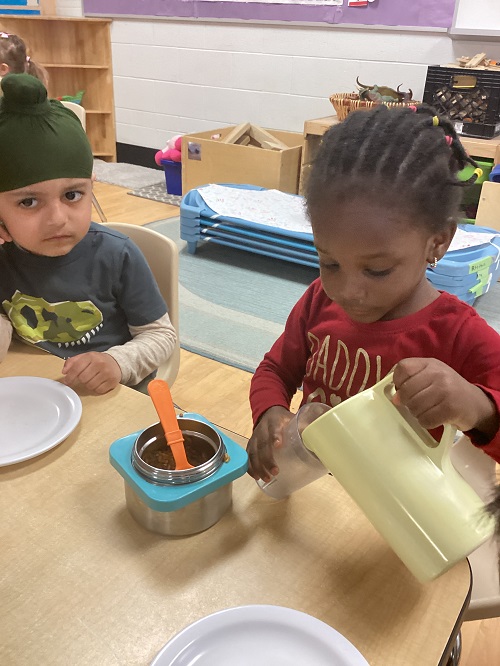
Throughout the experience, the children practiced patience, turn-taking, and awareness of others. They waited for their peers, shared serving tools, and learned how to safely handle spoons and tongs. Many children encouraged one another by offering help or cheering on their friends as they served themselves successfully. These moments supported the development of social skills, cooperation, and a sense of community within the classroom.
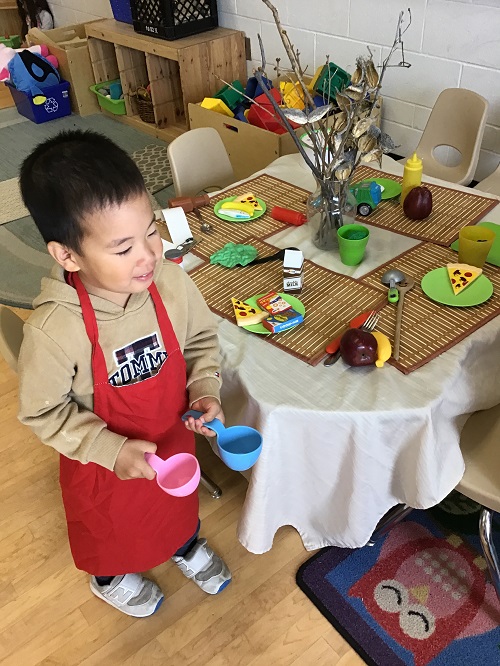
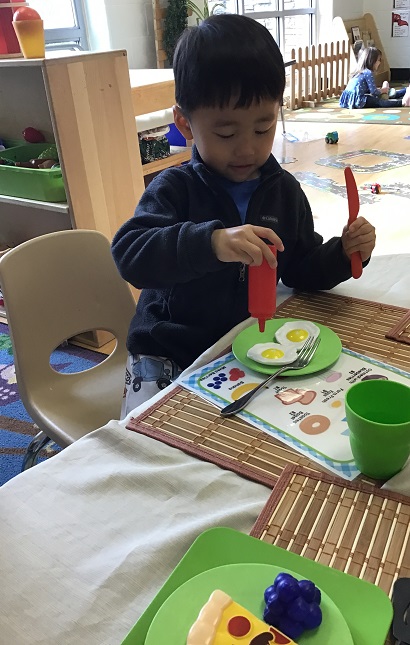
To extend the children’s interest in serving food and independence, we created a pretend restaurant in the dramatic play area. The children enthusiastically transformed the space into a restaurant where they could recreate mealtime experiences and act out different roles. Some children became servers taking food orders, while others became cooks preparing meals or customers asking for lunch items. The children practiced using polite language such as “What would you like to eat?”, “Here is your lunch,” and “Thank you.” This rich dramatic play experience encouraged communication, imagination, and collaboration among peers.
The pretend restaurant also gave the children opportunities to continue practicing serving skills using play materials, trays, spoons, and tongs. They explored how restaurants work while building confidence in their ability to help and contribute. Through role-playing, the children began making connections between the classroom environment and experiences from home and the community. Many children shared stories about helping their families by setting the table, carrying groceries, cleaning up, or assisting with simple cooking tasks at home.
These experiences remind us how capable preschoolers are when they are given meaningful opportunities to participate in daily routines. By encouraging children to serve themselves and engage in dramatic play connected to real-life experiences, we are supporting their independence, confidence, social-emotional development, communication skills, and physical growth.
Through everyday moments like lunchtime and imaginative play, the children are learning lifelong skills that help them become confident, capable, and caring members of their community.