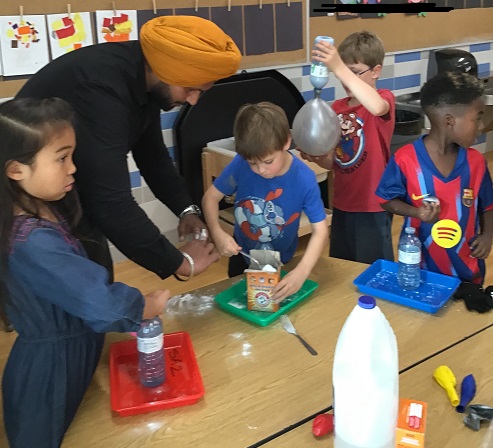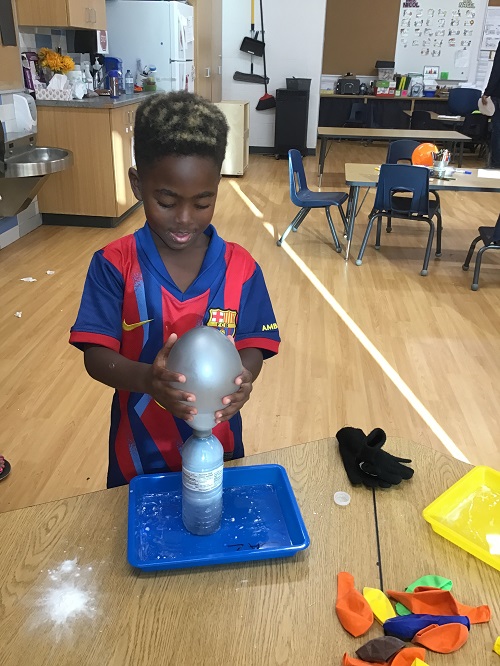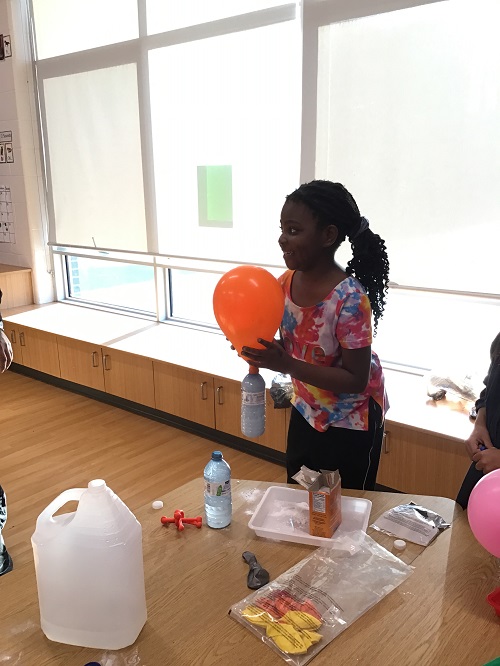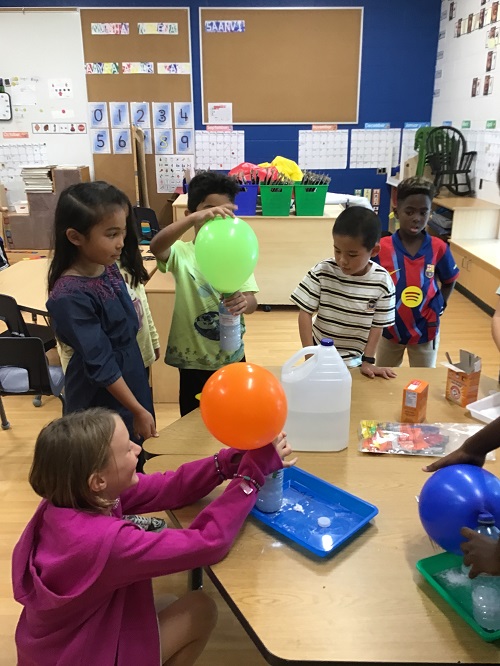
Today, the children in our School Age 2 program participated in an exciting science experiment called Blowing Up a Balloon with Science. The activity encouraged children to explore, make predictions and discover how science works through hands-on learning.Before starting the experiment, we gathered the children and asked, “How do we blow up a balloon?” The children responded that we use our mouths. We introduced them to a new way to blow up a balloon without using our mouths or a pump. We explained that we would use science to make the balloons grow.We set up the activity table with vinegar, baking soda, balloons, and empty plastic bottles. The children seem excited and eager to participate. To begin, we invited five children to take part in the first group while the other children stood nearby to observe what would happen.The children poured vinegar into the plastic bottles and carefully added three to four spoons of baking soda into their balloons. With some guidance, they placed the balloons over the openings of the bottles. Next, they lifted the balloons to let the baking soda fall into the bottles and mix with the vinegar.As soon as the two ingredients mixed, a chemical reaction began, producing gas that filled the balloons and made them grow bigger and bigger. The children watched with excitement and curiosity as the balloons inflated right before their eyes.Humza exclaimed, “This is so fun” Brodie shared, “I never seen it happen like this” While handling the baking soda in the balloon another child Ezra also commented, “This feels like squishy.”The children's excitement, observations, and comments showed how interested they were in exploring something new. They had the opportunity to experience science in a fun and meaningful way.The children developed their curiosity, observation skills and problem-solving abilities as they watched the changes taking place. They also used their senses to explore the texture of the baking soda and shared their thoughts and discoveries with others.Taking turns, following instructions and watching their peers encouraged cooperation, patience, and social interaction.To extend the children's learning, we can invite them to make predictions about what might happen if we change the amount of vinegar or baking soda. We can also explore other simple science experiments involving water, ice, bubbles, and different materials.It was wonderful to see the children's excitement and curiosity throughout the experiment. Their eagerness to participate and their surprised reactions reminded us that children learn best when they have opportunities to explore, experiment and discover things for themselves.